











ENCEINTES PROBABLEMENT LA PARTIE LA PLUS IMPORTANTE DE VOTRE SYSTÈME AUDIO DE VOITURE (Partie 1 sur 2)


OREILLES ET ENCEINTES – PLUS PROCHES QUE VOUS NE LE PENSEZ
D’où vient la musique que nous aimons tant ?
Bien sûr, vous me direz que cela vient des artistes, des musiciens, et je serai d’accord ! MAIS saviez-vous que le son, aussi simple qu’il puisse paraître à vos oreilles, n’est fondamentalement qu’un simple mouvement d’air ? Ce mouvement d’air est essentiellement généré par une membrane (nos cordes vocales, une corde de guitare, etc.) qui vibre et déplace l’air environnant, ou, dans le cas de notre système audio de voiture, généré par nos enceintes, qui font la majeure partie du travail pour la reproduction sonore.
Ainsi, la musique que vous entendez d’une guitare acoustique, par exemple, aussi harmonieuse soit-elle, est un mouvement d’air généré par la vibration des cordes qui poussent l’air de l’environnement immédiat sous forme de vibrations. Ces vibrations sont amplifiées passivement par la caisse de résonance de la guitare, et ce mouvement d’air généré est ensuite projeté dans l’environnement sous forme d’ondes sonores (vibrations de l’air). L’intensité perçue de ces ondes varie selon la puissance de la source et la distance entre la guitare et vos oreilles. En bref, sans air, vous n’aurez pas de musique !
Une fois transmises, ces vibrations sont captées par l’oreille externe et envoyées au tympan, une membrane rigide très sensible aux mouvements et à la pression de l’air. Au contact de ces ondes, le tympan vibre. Il transmet ensuite ces vibrations aux organes internes de l’oreille : le marteau, l’enclume et l’étrier, qui agissent comme des amplificateurs. À ce stade, les ondes sont environ 20 fois plus fortes que dans le tympan. La paroi interne de la cochlée, contenant des cellules ciliées sensorielles baignées de liquide, sera alors excitée par ces vibrations, déclenchant des impulsions nerveuses électriques qui voyagent vers le cerveau via le nerf auditif. C’est ce qu’on appelle la transduction.
Nous voilà donc au point où je vois que vous êtes perplexe face à tout ce discours sur l’anatomie et la physique ! Ne vous inquiétez pas, cela vous aidera bientôt à comprendre la chaîne acoustique et l’importance de certains éléments clés, y compris, surtout, le cœur de notre sujet aujourd’hui : LES ENCEINTES !

Faites confiance à vos oreilles !
Que ce soit par amplification, processus de transformation, capture du signal ou transmission, vos oreilles partagent de nombreuses similitudes avec un studio d'enregistrement et les systèmes audio qui reproduisent la musique. Les éléments de la « lecture » et de « l'amplification » doivent, en principe, rester impartiaux et neutres, c’est-à-dire qu’ils ne doivent pas dégrader ni colorer le signal, ce qui n’est pas toujours le cas dans notre monde électronique, mais est généralement assez précis avec un équipement de bonne qualité.
Il en va de même pour les éléments à la source et à la destination, qui, à mon avis, sont les plus critiques pour votre expérience d'écoute musicale. Laissez-moi vous expliquer… Avec l'âge, les structures internes de nos oreilles, comme certaines autres parties du corps, perdent leur souplesse et leur agilité, et donc notre capacité à percevoir les hautes fréquences est affectée. Ces structures désormais plus « rigides » nécessitent un flux d'air plus important et des vibrations plus fortes pour être correctement stimulées. D'où la perte auditive qui commence par les hautes fréquences, car celles-ci sont normalement plus fines et de plus faible amplitude.
C'est similaire à un microphone captant les vibrations de l'air dans un studio d'enregistrement. S'il n'est pas parfaitement adapté à l'usage prévu, ou s'il s'agit d'un appareil mal conçu, il ne pourra pas convertir adéquatement les vibrations perçues en impulsions électriques nécessaires à l'enregistrement. Il n'y a pas de magie ; peu importe la qualité des composants en aval dans un studio d'enregistrement, un microphone médiocre ne produira que des enregistrements médiocres.
Tout comme votre oreille, ce microphone transforme une vibration d'air en une impulsion électrique. Ce processus est une étape cruciale : beaucoup plus complexe que la simple lecture ou le traitement électrique, comme l'amplification. Bien qu'il y ait des transformations, tout reste dans le même domaine électrique, ce qui est loin d'être le cas pour le microphone. Le microphone nous permet de changer complètement le type de média en générant une information électrique à partir de la pression de l'air (vibrations). Pour avoir une réponse en fréquence linéaire et capturer avec précision toutes les subtilités de l'information acoustique, ce microphone doit être construit avec un diaphragme léger mais rigide (similaire au tympan de votre oreille). Ce diaphragme bouge au moindre vibration, mais sans se déformer pendant ces mouvements, maintenant ainsi sa linéarité et transmettant uniquement l'information captée, ni plus ni moins. Si ce diaphragme se déforme sous les vibrations (distorsion mécanique), le microphone générera inévitablement des impulsions électriques indésirables (artefacts) et donc du bruit audio qui polluera notre source musicale… ET NOUS NE VOULONS PAS ÇA !

GARDEZ LES BONNES VIBRATIONS, ET SEULEMENT CELLES-LÀ !
Tout comme une guitare mal accordée ou un microphone de mauvaise qualité, un haut-parleur qui ne peut pas reproduire fidèlement et harmonieusement votre source musicale sera loin d'être agréable à vos oreilles ! Pour faire une autre comparaison, et tout comme votre oreille ou un microphone, un haut-parleur transforme l'information musicale d'un type de média à un autre. Cependant, puisque le haut-parleur est un émetteur sonore et non un récepteur, cette transformation se fait en sens inverse. Il convertit le courant électrique du signal audio en un champ magnétique opposé à son aimant pour générer une pression d'air (vibrations) à l'aide d'un cône ou d'un dôme (diaphragme) fixé à son moteur (la bobine mobile et l'aimant du haut-parleur). Essentiellement, c'est l'équivalent d'un microphone dans un studio d'enregistrement, mais à l'autre bout de la chaîne acoustique ET c'est pourquoi les haut-parleurs sont si importants dans votre système audio de voiture !

Bases du haut-parleur – Comment il est fabriqué
Puisqu’un haut-parleur est très similaire en concept à un microphone ou à votre oreille, vous comprendrez facilement qu’il partage aussi des similitudes techniques importantes dans les composants nécessaires à sa construction.
- Plus le cône du haut-parleur est léger, plus il est facile à déplacer, et donc plus le son transmis à vos oreilles est puissant. Mais surtout, cela permet au haut-parleur de se mouvoir plus rapidement et de conserver toute la dynamique indispensable à la reproduction musicale.
- Plus un cône est rigide, plus il peut déplacer l’air sans se déformer, et donc plus il est fidèle à la source originale avec moins de distorsions, ce qui se traduit logiquement par une meilleure qualité sonore.
Malheureusement, dans notre monde physique, ces deux points sont difficiles à concilier simultanément. Pour obtenir un cône rigide, il faut utiliser des matériaux plus rigides et donc plus lourds, ou en utiliser davantage pour augmenter sa rigidité. Cela aura malheureusement pour effet d’augmenter sa masse et, par conséquent, son inertie, ce qui se traduit par un haut-parleur nécessitant une force motrice plus importante pour accomplir sa tâche.
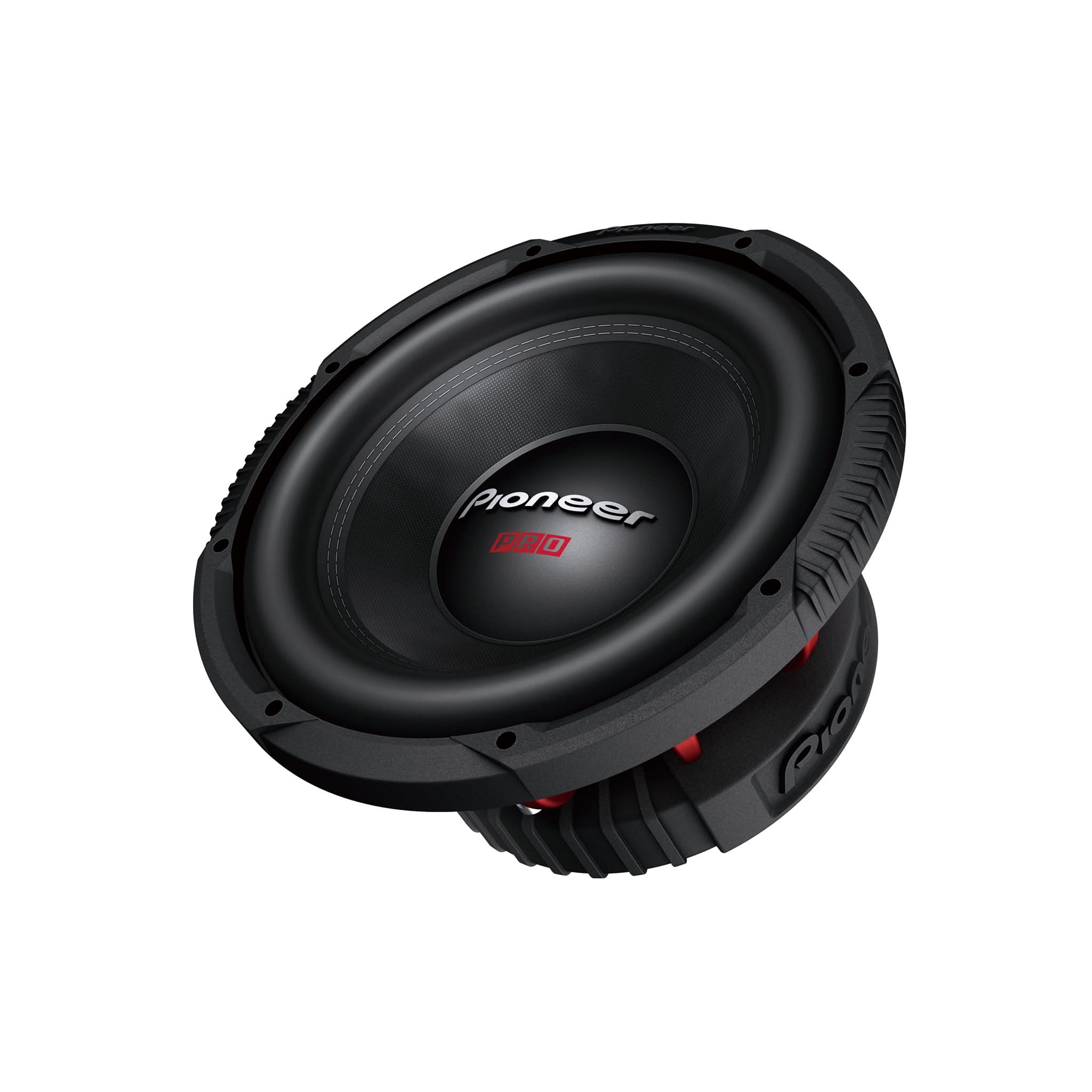
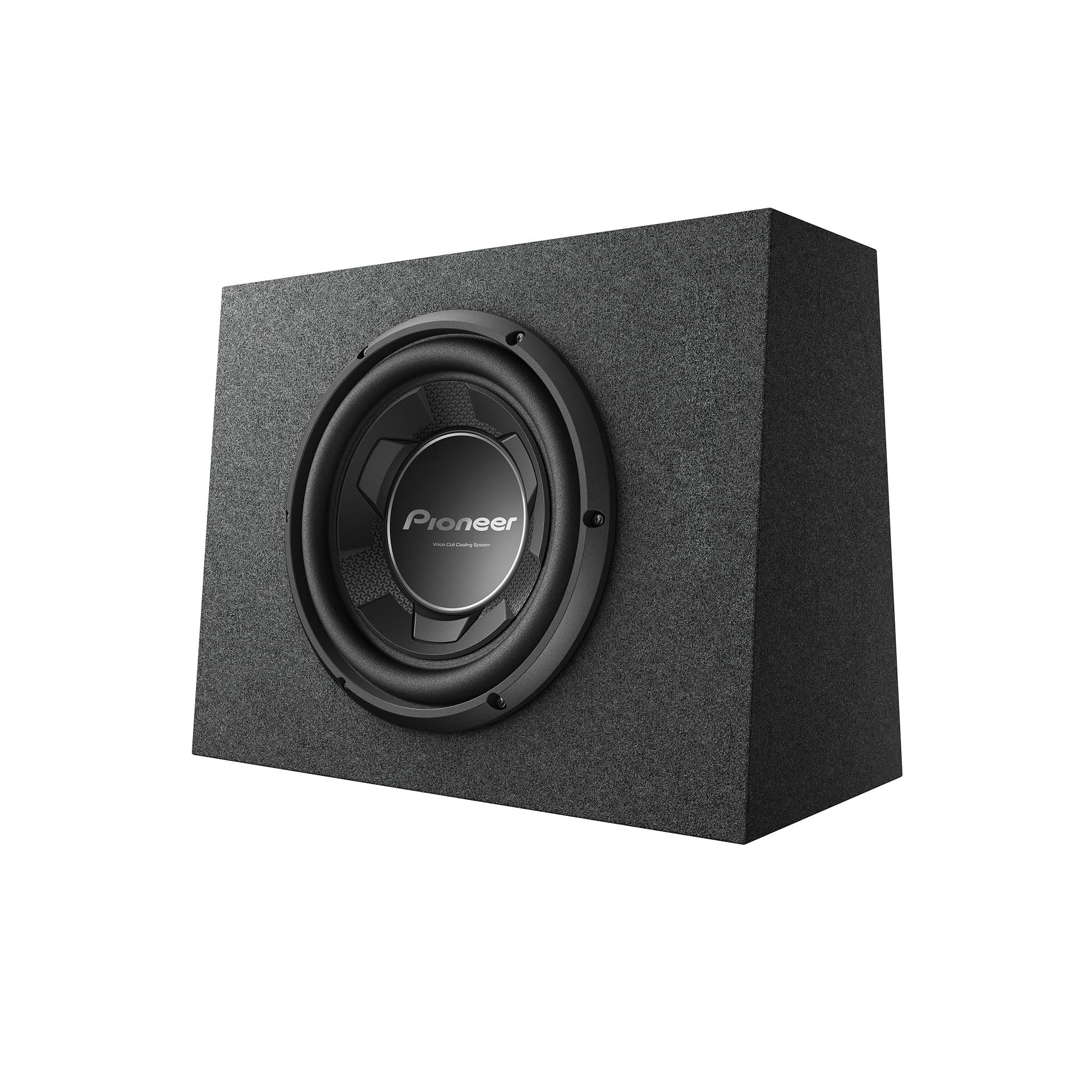
Il faut aussi garder à l’esprit que plus les fréquences sont basses, plus il est difficile de déplacer l’air pour générer le son. Par conséquent, des haut-parleurs plus grands sont nécessaires pour atteindre les niveaux requis à ces fréquences, ce qui entraîne un cône plus lourd, nécessitant plus de puissance pour atteindre le même niveau de sortie qu’un haut-parleur plus petit. C’est généralement pourquoi on trouve sur le marché des subwoofers avec des puissances nominales 3 à 5 fois supérieures, voire plus, à celles d’un haut-parleur large bande typique.

Bases du haut-parleur – Il n’existe pas de solution universelle
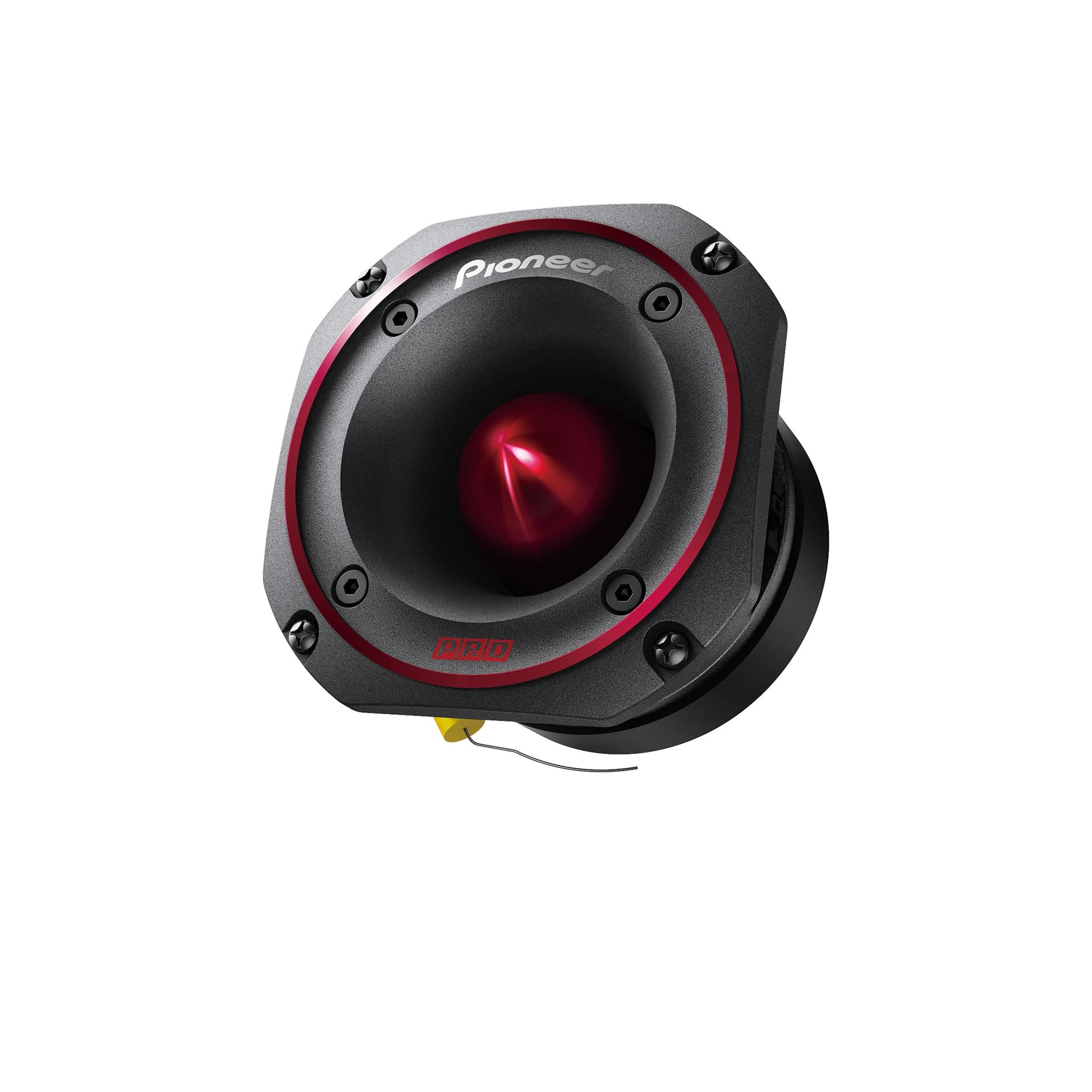
Parce que les hautes fréquences nécessitent des mouvements plus rapides du piston (cône ou dôme du haut-parleur) que les fréquences moyennes et basses pour générer un déplacement d'air, et que les basses fréquences requièrent des unités plus grandes et plus lourdes, il est pratiquement impossible de concevoir un haut-parleur avec la perfection de l'oreille humaine… du moins si vous souhaitez rester dans un budget réaliste pour votre système audio ! Il est impossible qu’un seul haut-parleur fasse tout le travail.
-
Plus les fréquences à reproduire sont élevées, plus un haut-parleur doit être rapide et précis dans ses mouvements.
- Des matériaux légers sont nécessaires pour la précision dans les transitoires et la reproduction fidèle de la source audio.
- Une rigidité structurelle significative est requise pour la précision acoustique, minimisant la distorsion mécanique de la coupole.
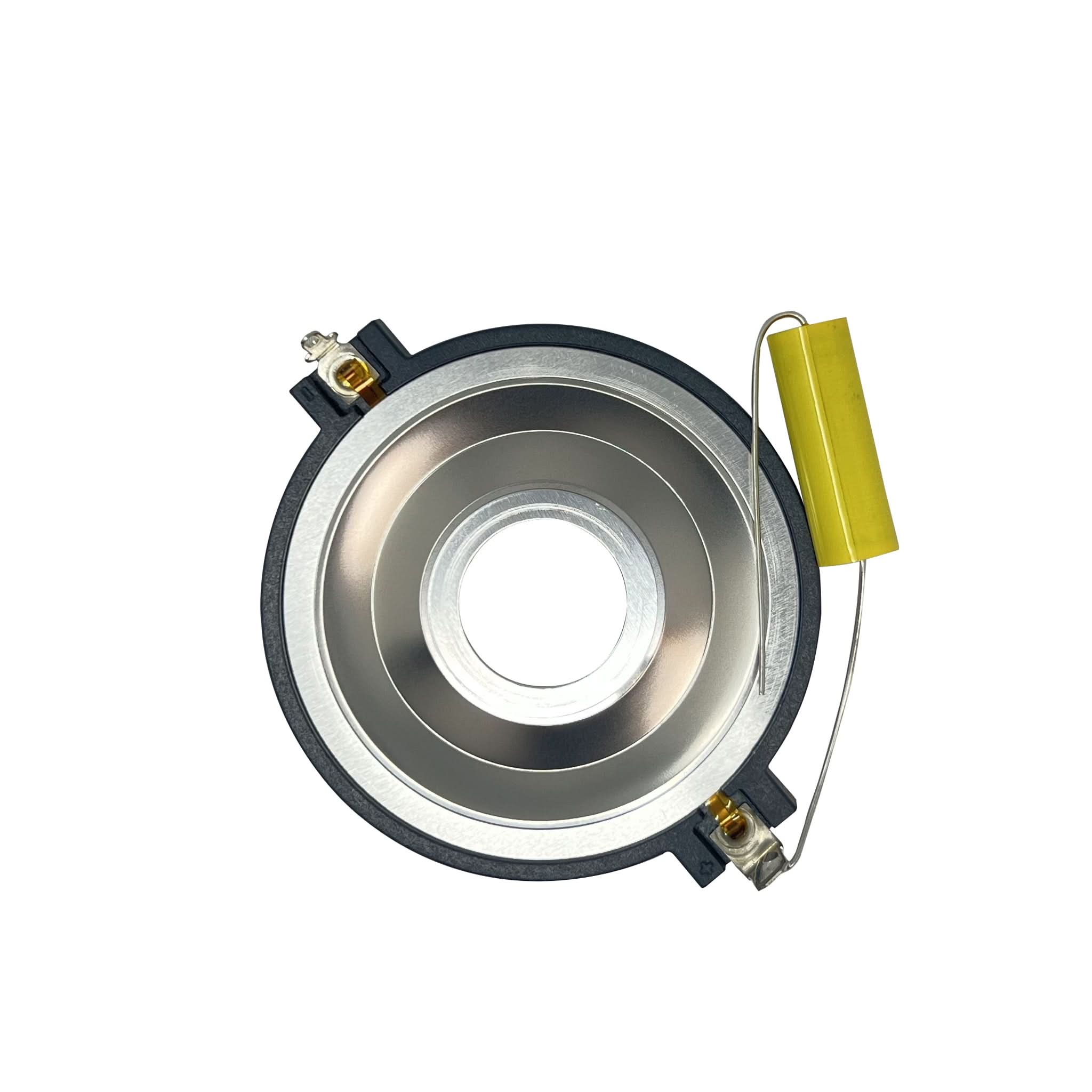
- Une petite taille physique est possible grâce à la facilité de transmission de ces fréquences, nécessitant moins de poussée que pour les basses fréquences.
- Un bon tweeter vous offrira tous les détails musicaux sans être trop présent ou « agressif », comme beaucoup le disent.
-
Plus les fréquences à reproduire sont basses, plus un haut-parleur doit être grand, mais aussi plus rigide pour maintenir le mouvement sans distorsion mécanique.
- Une structure de moteur plus grande (cône / bobine / aimant) est nécessaire en raison de la difficulté de transmission du son, exigeant des amplitudes de poussée très élevées pour générer le mouvement d'air nécessaire à ces bonnes vibrations.
- Une très grande rigidité structurelle est requise pour la précision acoustique, minimisant la distorsion mécanique du cône afin de vous offrir des basses nettes et serrées.
- Des matériaux légers sont nécessaires pour une réponse transitoire précise, une reproduction fidèle de la source et une attaque des basses propre et rapide lorsque cela est nécessaire.
- Un bon caisson de basses délivrera toutes les basses et leurs vibrations musicales tout en maintenant un contrôle rapide et précis pour ne reproduire que les notes de votre enregistrement et éviter toute mauvaise transition vers les fréquences médiums.
-
Pour les fréquences médiums, il faut trouver un équilibre entre les exigences des hautes et basses fréquences.
- La rigidité structurelle est essentielle pour une transition fluide et naturelle entre les basses et les fréquences médiums.
- Des matériaux légers sont également nécessaires pour une réponse transitoire précise et une reproduction fidèle de la source afin d'offrir des voix précises et un dynamisme naturel.
- Un bon haut-parleur médium offrira un son chaud, des voix naturelles et équilibrées, ainsi que les détails acoustiques nécessaires sans être trop brillant.
Comme vous pouvez le voir dans ces descriptions, il serait difficile de trouver un haut-parleur qui coche parfaitement toutes ces cases, et c'est pourquoi je dis que le design parfait pour un haut-parleur n'existe pas ; ce sera toujours une question d'équilibre/compromis et un choix d'améliorer une caractéristique au détriment d'une autre.

Bases du haut-parleur – L'environnement a une énorme influence.
Lors de l'achat de haut-parleurs pour voiture, il est extrêmement important de prendre en compte que l'environnement de la voiture est très différent de votre salon ou de votre home cinéma à la maison.
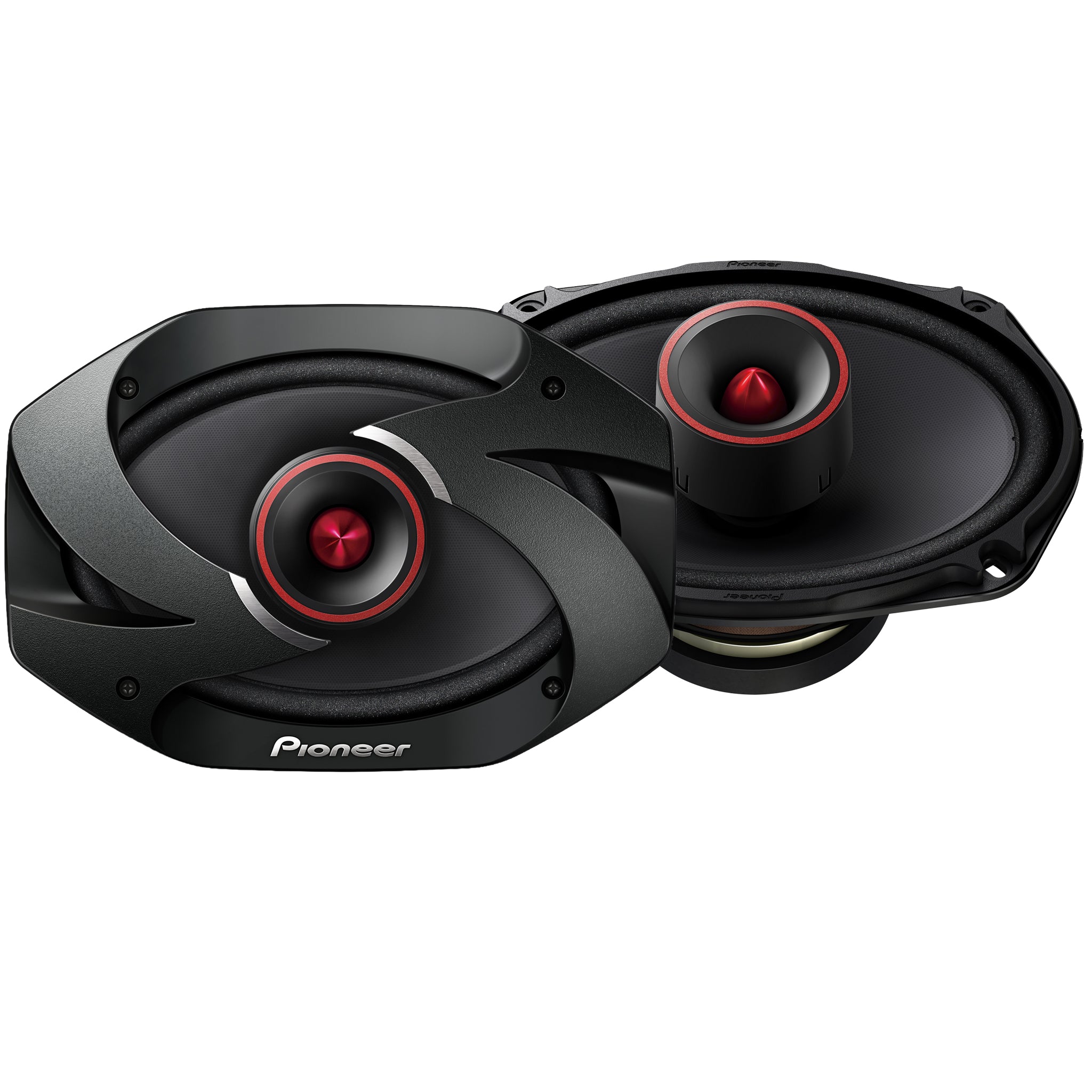
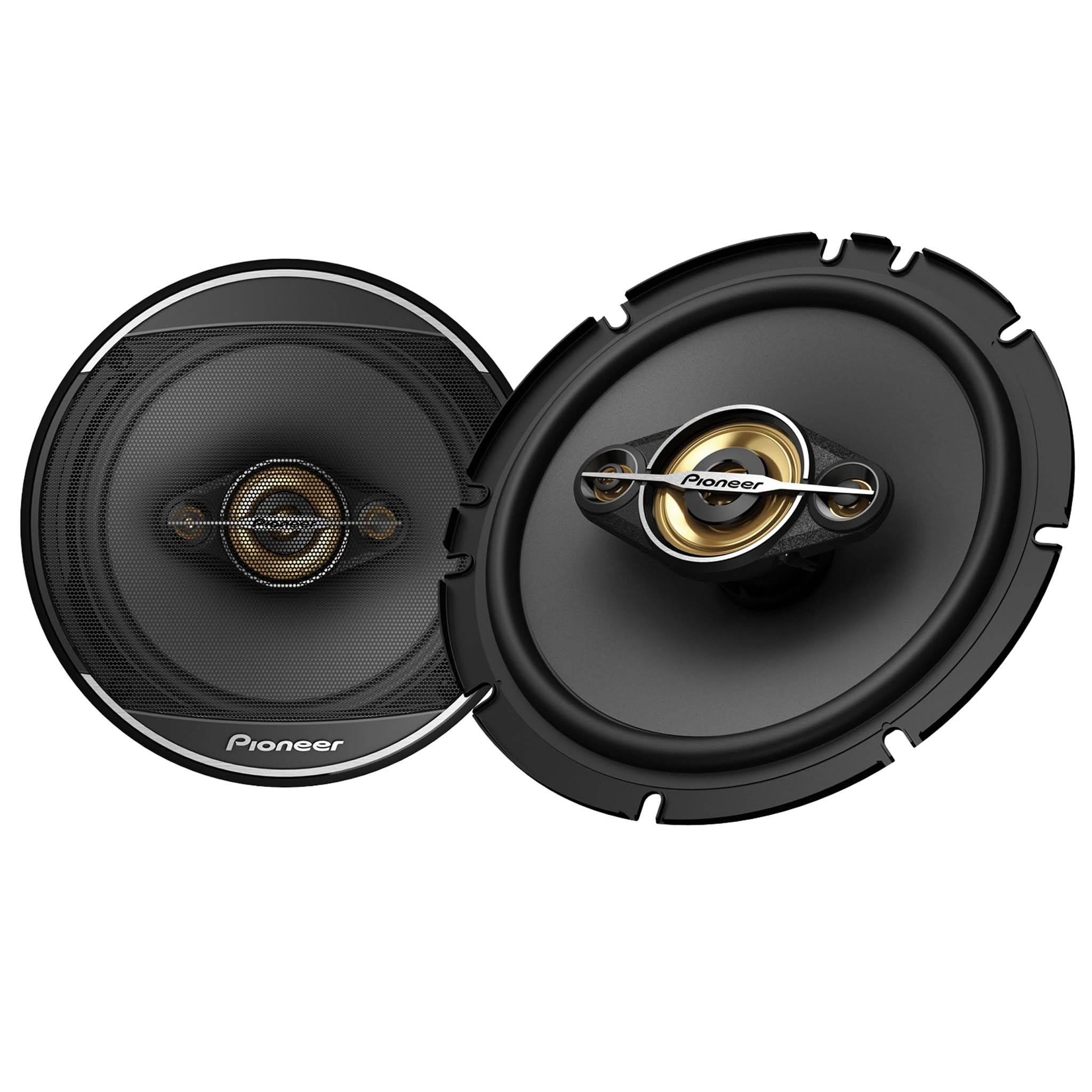
Bien qu'ils soient tous deux des haut-parleurs, un haut-parleur domestique et un haut-parleur de voiture ne sont pas conçus de la même manière. L'environnement de la voiture est, bien sûr, plus exigeant pour un haut-parleur, en raison des variations de température et d'humidité, sans parler des contraintes physiques liées à leur installation dans votre voiture.
Voici les points importants à considérer pour vos haut-parleurs de voiture afin de confirmer le bon ajustement physique :
-
Est-il compatible avec votre voiture et vos besoins ?
- Est-ce la bonne forme et la bonne taille ?
- Avez-vous assez de dégagement pour accueillir la profondeur du haut-parleur ?
- L'aimant dépasse-t-il la fenêtre de la porte ?
- Pour un haut-parleur coaxial, avez-vous le dégagement nécessaire ou le tweeter gênera-t-il la garniture de porte ?
-
La configuration de votre voiture nécessite-t-elle des plaques d'adaptation ?
- pour s'adapter à votre tôle,
- pour fournir un dégagement arrière suffisant,
- ou pour s'adapter parfaitement à la garniture de porte.
-
Les matériaux utilisés pour fabriquer les haut-parleurs sont-ils capables de résister à divers éléments ?
- Température,
- Humidité,
- Vibrations,
- Etc.
En plus de gérer cet environnement, un haut-parleur de voiture doit également intégrer différents composants et designs pour offrir une expérience acoustique différente de celle que vous trouveriez typiquement dans un haut-parleur utilisé chez vous. Ces facteurs influencent grandement l'acoustique automobile et auront donc un impact significatif sur la performance acoustique de vos haut-parleurs une fois installés dans votre voiture :
-
Un environnement d'écoute plus petit.
- impactant la réponse des basses,
- et impactant la manière dont les sons seront perçus.
-
Haut-parleurs positionnés en dehors du « sweet spot » typique par rapport à l'auditeur.
- Différentes distances entre les haut-parleurs et les auditeurs.
-
Différentes positions et angles des haut-parleurs,
- les angles et le positionnement de vos tweeters,
- ou haut-parleurs dans les portes.
- ou encore installés sur la plage arrière
-
Différentes hauteurs et angles d'installation ;
- tweeters sur le tableau de bord près du pare-brise,
- woofer installé dans la partie inférieure de la porte),
- haut-parleurs dans les portes, orientés dans une direction,
- haut-parleurs sur la plage arrière face à face.
- Les différents matériaux, formes et textures dans l'habitacle influencent grandement la manière dont les sons se propagent et se réfléchissent dans votre environnement.
- Etc.

COMMENT FAIRE UN CHOIX SIMPLE, MAIS BON ?
Écoutez vos oreilles... et vos émotions
Je suis sûr que simplement lire ces critères a déjà suscité quelques réflexions de votre part. C'est pourquoi je vous encourage à essayer l'exercice suivant lorsque vous écoutez différents haut-parleurs en magasin, afin de pouvoir sélectionner soigneusement le meilleur produit qui répond à vos besoins.
La musique que vous connaissez
Tout d'abord, et c'est crucial pour cet exercice, assurez-vous d'avoir une sélection musicale que vous connaissez et appréciez régulièrement. C'est la base d'une bonne écoute analytique. Si vous écoutez de la musique bien enregistrée, mais que vous ne connaissez pas du tout cette musique, vous n'aurez aucun point de référence pour confirmer si ce que vous entendez est bon ou non. Alors, ayez votre musique préférée à portée de main !
La façon dont vous l'écoutez
Un autre point important, en plus de votre sélection musicale, est d'écouter les fichiers musicaux que vous écoutez habituellement. Écoutez-vous de la musique en format sans perte comme un fichier FLAC ? Écoutez-vous votre musique via un service de streaming ? Ici, je vous encourage vivement à faire de même lors de la sélection de vos enceintes. Pourquoi ? Simplement parce que les performances et les réponses acoustiques varieront en fonction de la qualité et du format de votre source, et auront donc un impact significatif sur la réponse acoustique de l'enceinte. Par exemple, si vous écoutez de la musique en streaming lors de la sélection de vos enceintes, puis que vous écoutez de la musique sans perte dans votre voiture après leur installation, vous percevrez beaucoup plus d'informations dans les hautes fréquences par rapport à ce que vous avez entendu lors de la sélection, et vous trouverez probablement ces hautes fréquences plus fortes ou peut-être écrasantes, voire trop agressives selon vos préférences d'écoute.
Bien sûr, rien ne vous empêche de vous amuser à découvrir différents types de musique et de formats d'enregistrement. Cela peut être le début d'un merveilleux voyage de découverte, ou même une redécouverte d'un morceau que vous connaissez déjà, mais avec plus de détails et d'informations musicales ; il n'y a rien de plus agréable que d'écouter un morceau de musique que l'on connaît bien et d'entendre, pour la première fois, de nouvelles notes, sons ou vibrations grâce aux enceintes que vous venez de sélectionner ou au type de fichier que vous avez utilisé pour écouter votre musique… ou les deux !
Écoutez et comparez avec de nouvelles perspectives
Demandez à écouter différentes enceintes compatibles avec votre véhicule, idéalement dans le même environnement, et en utilisant les mêmes sources et amplifications pour l'exercice.
Tout d'abord, je vous suggère d'écouter ces enceintes en vous plaçant directement en face d'elles et à environ 1 mètre à 1,2 mètre de distance (la configuration typique d'une pièce d'écoute). Lors du choix d'enceintes pour votre domicile, éliminer certaines enceintes à ce stade serait facile, simplement en mettant de côté celles que vous n'aimez pas. Mais ce n'est pas le scénario à considérer pour la sélection de vos enceintes de voiture. Nous devons ajouter un facteur important à cette sélection : ces enceintes ne sont pas installées dans un environnement idéal et ne sont pas parfaitement alignées (directement en face) avec votre position d'écoute. Par conséquent, vous devez absolument effectuer un second exercice, en tenant compte de cet angle d'écoute différent dans une voiture.
Sur cette base, je vous suggère, comme deuxième étape obligatoire, de répéter les mêmes tests d'écoute sur les mêmes enceintes, mais cette fois en vous positionnant à un angle d'environ 45 degrés par rapport à elles. À partir de ce moment, je suis certain que vous remarquerez une différence significative dans la performance acoustique, et ce n'est qu'alors que vous pourrez commencer à éliminer des enceintes de votre liste.
Assurez la meilleure qualité sonore à la source (haut-parleurs)
Pour votre processus de sélection, gardez à l'esprit que ces haut-parleurs doivent avoir une similarité acoustique, qu'ils soient positionnés en axe (directement en face des haut-parleurs) ou hors axe (en angle) par rapport à l'auditeur dans la voiture. Si vous remarquez des différences significatives dans la réponse acoustique selon votre position d'écoute, ce haut-parleur n'est probablement pas un bon choix pour votre voiture. À titre d'exemple, considérez le haut-parleur installé dans votre porte droite par rapport à celui de la porte gauche. Ces haut-parleurs ont deux angles et distances complètement différents par rapport à votre siège conducteur. Par conséquent, même si ces haut-parleurs sont identiques des deux côtés, leur réponse acoustique variera considérablement selon leur angle d'installation, vous n'obtiendrez donc pas un résultat acoustique similaire pour chaque source musicale (haut-parleur gauche vs. haut-parleur droit) une fois installés dans votre voiture. Cela impliquera inévitablement de faire des corrections acoustiques indépendantes pour les canaux gauche et droit à l'aide d'appareils électroniques, tels qu'un égaliseur ou un DSP capable de corriger ces canaux séparément. Bien que ces dispositifs de correction se trouvent généralement dans des systèmes plus complexes, à mon avis, on peut largement les éviter en se concentrant sur la construction d'une base plus solide pour le système plutôt qu'en comptant sur des corrections électroniques. Cela peut aussi être vu comme une façon d'économiser de l'argent en investissant dans de meilleurs haut-parleurs qui nécessiteront moins de corrections ultérieures grâce à une base plus solide. Pourquoi prévoir de réparer quand on peut éviter le problème avec de meilleurs composants à la source ? Attention, je ne dis pas ici que les égaliseurs ou DSP sont inutiles ou mauvais ; ce sont d'excellents outils pour affiner le système, pas pour faire des corrections majeures. Si vous commencez avec de mauvais haut-parleurs ou inadaptés, ce sera un long chemin pour obtenir des résultats optimaux... si c'est même possible. En résumé, COMMENCEZ AVEC UNE BONNE BASE !
À MI-CHEMIN DE NOTRE VOYAGE
Comme c'est un sujet très long et difficile à condenser, je n'ai d'autre choix que de vous laisser en suspens un moment… Ou plutôt, d'appuyer sur le bouton pause pour vous laisser le temps de réfléchir à toutes ces nouvelles informations, qui, j'en suis sûr, ont suscité quelques réflexions de votre part.
Je vous retrouverai le mois prochain pour la suite de cet article, où nous explorerons les différentes solutions possibles pour répondre à toutes les exigences d'un haut-parleur de voiture, que nous venons d'examiner aujourd'hui.





)