
















Remplacement des haut-parleurs d'origine : pourquoi ceux de votre voiture ne sont pas à la hauteur

Nous avons tendance à remarquer quand nos pneus sont usés ou que nos essuie-glaces commencent à laisser des traces, mais il y a une partie de nos voitures qui s’use si lentement que nous ne le remarquons presque pas : les haut-parleurs.
Un jour, votre podcast préféré est d’une clarté cristalline. Le lendemain, vous vous penchez et plissez les oreilles, essayant de capter le dialogue par-dessus le bruit de la route. Vous augmentez le volume pour mieux entendre, mais ça devient juste... plus grinçant.
Vous pourriez blâmer la connexion Bluetooth ou la station de radio, mais la vérité est généralement beaucoup plus simple.
Alors que les systèmes d’origine sont conçus pour répondre à des exigences de production spécifiques et fournir une base solide pour l’auditeur moyen, il y a un monde de différence lorsque vous vous tournez vers les options de seconde monte.
L’équilibre des haut-parleurs d’usine
Les constructeurs automobiles ont la tâche difficile d’équilibrer des milliers de composants pour créer un véhicule cohérent. Pour atteindre les objectifs de poids et d’efficacité, les haut-parleurs inclus dans une construction d’usine standard sont souvent conçus pour un usage léger.

Il suffit de regarder ce haut-parleur d’une Camry 2018. En y regardant de plus près, vous pouvez voir comment il a été optimisé pour certaines exigences clés :
- Cônes légers : De nombreux haut-parleurs d’usine utilisent du papier traité ou des composites minces. Ils sont incroyablement efficaces pour une utilisation à faible puissance, mais ils peuvent manquer de la rigidité nécessaire pour maintenir la clarté à des volumes plus élevés.
- Structures de moteur compactes : Les haut-parleurs standard sont souvent dotés d’aimants et d’assemblages de moteur plus petits. Ceux-ci sont parfaits pour réduire le poids du véhicule, mais ils ont moins de puissance pour un contrôle précis du cône par rapport aux haut-parleurs de seconde monte.
- Cadres composites : Les haut-parleurs d’usine sont souvent logés dans des cadres composites légers. Bien qu’excellents pour la fabrication, ils peuvent parfois fléchir lorsqu’ils sont sollicités, ce qui entraîne une perte subtile d’énergie des basses.
Le panneau de porte : un environnement difficile
Il ne s’agit pas seulement de la construction des haut-parleurs ; il s’agit de l’environnement.
L’habitacle de votre voiture est l’un des endroits les plus difficiles pour l’électronique. Au fil de quelques années, plusieurs facteurs se combinent pour dégrader votre son :
- Variations extrêmes de température : L’intérieur de votre voiture peut passer de -10°F en hiver à 140°F un après-midi d’été. Ce cycle thermique constant affecte les matériaux de tout haut-parleur au fil des ans.
- Humidité : Bien que les portes soient conçues pour évacuer l’eau, l’humidité et l’humidité se frayent toujours un chemin à l’intérieur. Au fil du temps, ces éléments peuvent modifier subtilement les propriétés physiques des matériaux des haut-parleurs standard.
- Rigueurs quotidiennes : Des milliers de kilomètres de vibrations routières et le « claquement » quotidien des portes qui se ferment signifient que vos haut-parleurs sont constamment soumis à un stress physique.
La mise à niveau Pioneer
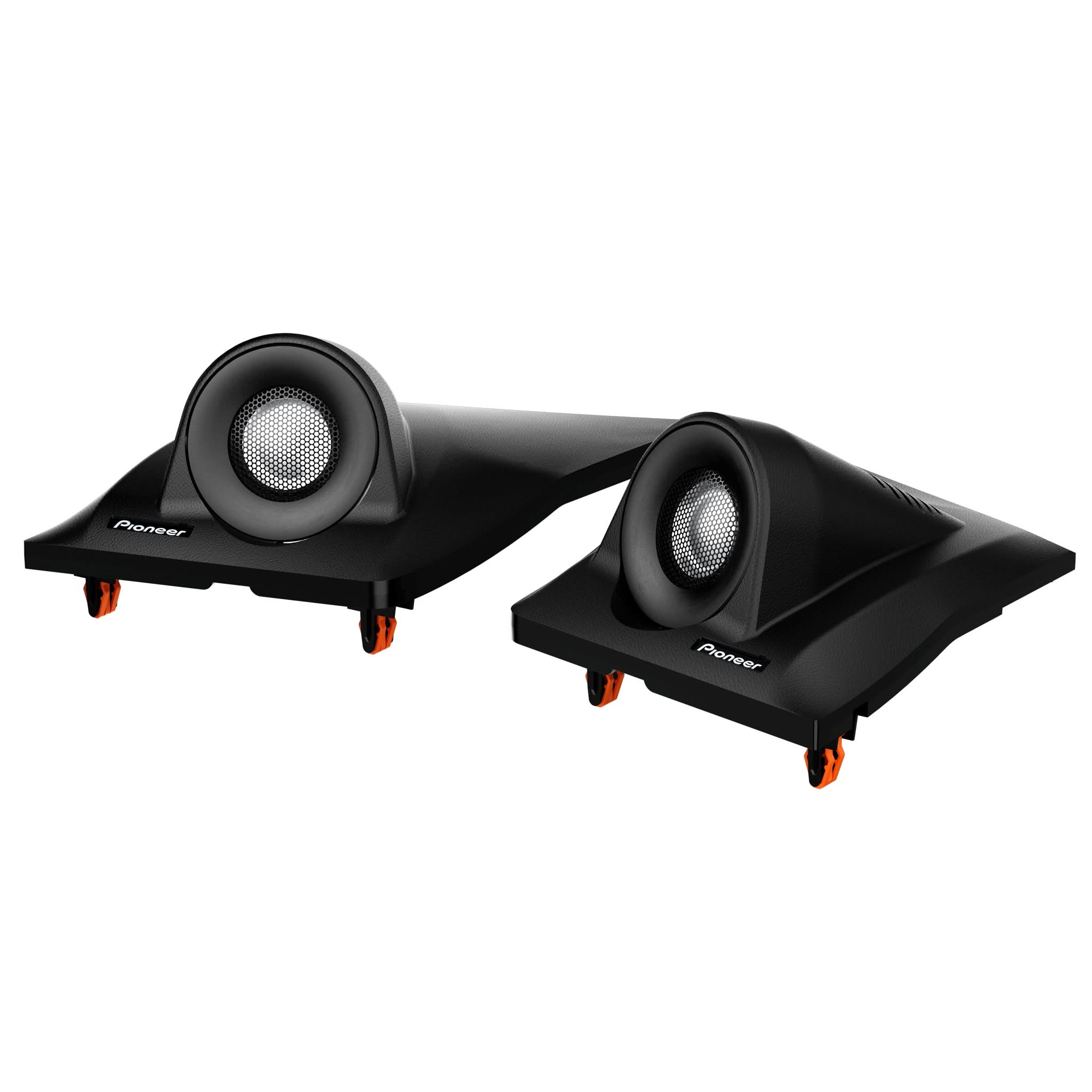
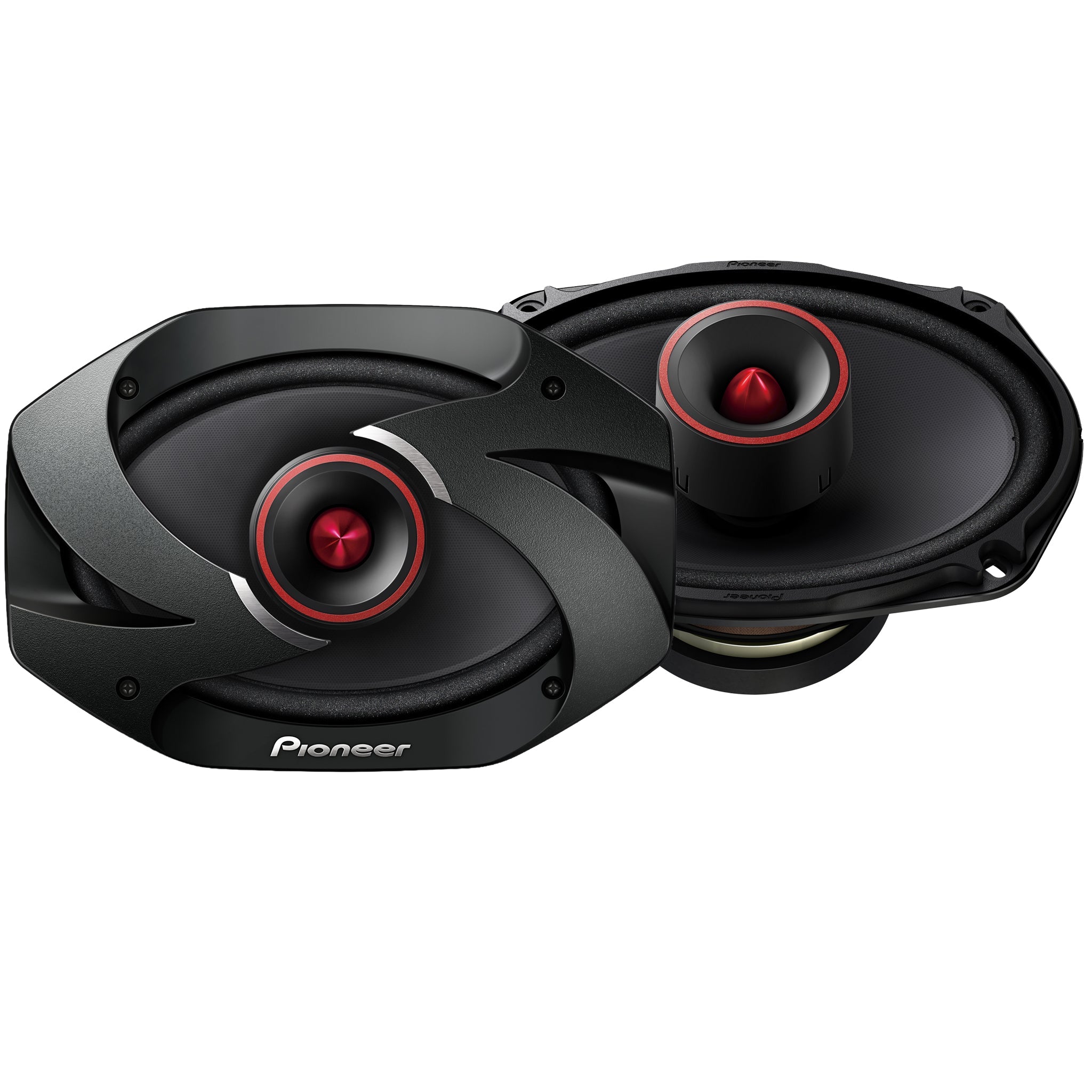
Remplacer ces unités standard par de nouveaux haut-parleurs Pioneer change instantanément l’expérience de conduite.

Voici ce qui fait la différence :
- Matériaux haute performance : Alors que les haut-parleurs standard se concentrent sur l’efficacité, Pioneer utilise des composites haut de gamme pour nos haut-parleurs de seconde monte. Dans nos modèles phares, vous trouverez de la fibre aramide – un synthétique à haute résistance connu pour être incroyablement rigide mais léger. Qu’il s’agisse d’un mélange d’aramide ou d’un cône en polypropylène moulé par injection robuste, ces matériaux sont conçus pour rester rigides et clairs, même en cas d’humidité élevée.
- Meilleure clarté : Les modèles Pioneer incluent souvent un tweeter dédié (ce petit dôme au centre). Il gère les notes aiguës, comme les cymbales et les voix, laissant le grand cône gérer les basses. C’est la différence entre un homme-orchestre et un orchestre complet.
- Intégrité structurelle : Les haut-parleurs Pioneer utilisent des paniers plus rigides et renforcés qui servent de base solide, garantissant que toute cette énergie est utilisée pour déplacer l’air (et votre âme), et non le cadre du haut-parleur.
- Conçu pour durer : Des cônes durables aux adhésifs spécialement formulés résistants aux intempéries, les haut-parleurs Pioneer sont conçus pour maintenir leur son haute fidélité saison après saison.
Entendez la différence
Nous investissons souvent dans des niveaux de finition haut de gamme et des systèmes d’infodivertissement intelligents, mais le matériel qui déplace réellement l’air – les haut-parleurs – est souvent le composant le moins cher de tout le système d’usine.
Si vous avez l’impression que votre voiture a perdu sa voix, il est temps de regarder les panneaux de porte. Ce faisant, vous trouverez l’un des moyens les plus économiques de transformer un trajet ennuyeux en le meilleur moment de votre journée.
Prêt à entendre ce qui vous manquait ? Consultez notre Guide d’ajustement pour trouver la correspondance parfaite pour votre véhicule.